
Short answer: For a Dallas SBA or bank loan, expect your lender to ask for a current Profit & Loss statement and Balance Sheet, tax returns, a list of existing debts, and possibly projections. Get the lender’s exact checklist first. At LUCI Financial Solutions, we clean up and reconcile your QuickBooks Online books, prepare senior-reviewed management financial statements, and help you explain the numbers. Your CPA handles tax returns and any CPA-prepared statements the lender requires.
Key takeaways
- Ask your lender which periods, accounting basis, and level of financial statement preparation it requires before paying for cleanup.
- Start with missing months and unreconciled accounts. Those gaps can affect cash, revenue, expenses, and debt across the whole package.
- Compare your books with filed returns and source statements. Document legitimate differences and correct errors where they started.
- Bring in a bookkeeper or controller for historical reporting, your CPA for tax and CPA-specific work, and a fractional CFO if the forecast needs more analysis.
What is the lender trying to learn from my books?
Start with repayment. Your Profit & Loss statement, or P&L, shows revenue, expenses, and profit over a period. Your Balance Sheet shows what the business owns and owes as of a particular date. A business can show a profit while waiting on customer payments and still have payroll, bills, and existing loan payments coming due.
Next comes consistency. If the P&L shows strong sales while bank deposits look light, there may be a clear explanation. Clients may still owe you, a payment processor may have withheld fees, or deposits may have arrived after the reporting period ended. The lender needs to see which explanation fits and what records support it.
Say your Plano agency invoices clients when a campaign launches, then collects after the work has started. The invoices can explain why revenue appears before cash reaches the bank. The aging report can show whether customers are paying on their usual schedule or whether collections have slowed. That difference matters when you’re asking a lender to look ahead.
Ask for a written checklist before exporting reports. The U.S. Small Business Administration usually does not lend directly. Participating lenders, such as banks and credit unions, make SBA-guaranteed loans such as 7(a), and each lender sets its own document checklist. The SBA’s own 7(a) loan page says the same thing: you apply directly through a lender, and the lender tells you which documents you need.
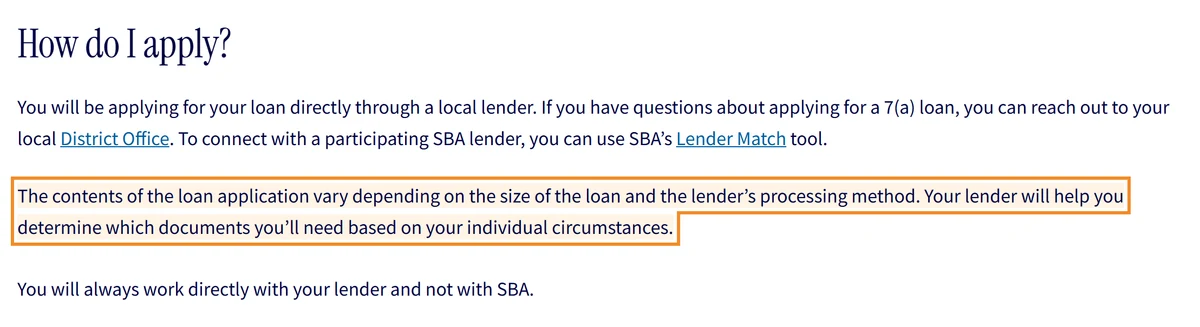
Four answers from the lender shape everything that follows, so get them in writing: the reporting dates it wants, cash or accrual basis, the file formats it accepts, and whether any statements must be prepared by a CPA. Those answers decide which records you gather and who has to prepare them.
What documents should I expect the lender to ask for?
Some items come from QuickBooks Online. Others come from your CPA, financial institutions, or your own records. Use the checklist to identify a source and a person responsible for each item before you start assembling files.
| What the lender may ask for | Where it comes from | What makes it fall apart |
|---|---|---|
| Interim P&L and Balance Sheet | QuickBooks Online, through the lender’s requested reporting cutoff. | The P&L covers a different cutoff from the Balance Sheet, or either report includes an unfinished month. |
| Prior-year financial statements | Closed books and the year-end reporting package. | Year-end adjustments are missing, or prior-period figures changed without a record of why. |
| Business and personal tax returns | Copies of the returns as filed, from the owner or tax preparer. | Drafts are sent, or differences between the business return and books go unexplained. |
| Business debt schedule | Loan agreements and current lender statements, checked against the books. | A debt is left off, a payoff is still listed as open, or the balance uses a different date. |
| Accounts receivable and payable aging | Open customer invoices and vendor bills in QuickBooks Online. | Payments or credits are unapplied, or old invoices and bills appear open after settlement. |
| Bank statements | Original statements from the financial institution. | A month is missing, or the reconciliation leaves unexplained differences between bank activity and the books. |
| Projections and cash flow forecast | Recent financial results, the owner’s operating assumptions, and planned use of the funds. | Sales rise on paper without support, or cash timing ignores collections, spending, and debt payments. |
| Owner’s personal financial information | Owner records and any instructions or template supplied by the lender. | Assets and obligations are incomplete, outdated, or mixed with company balances. |
Use the lender’s checklist to decide which rows apply and what date belongs on each file. An open-invoice report can support the receivables balance only if you run it as of the same date as the Balance Sheet you submit.
What should I fix first if my books are behind?
Start with the records that support the largest parts of the package. If the month is incomplete or the bank activity is wrong, fixing a handful of expense categories first can leave you revising the same reports later. We work from source documents and then check how each correction affects the financial statements.
- Missing months and unreconciled accounts. Gather the original statements and enter missing activity before closing the period. Reconcile each bank, credit card, and loan account month by month, starting from a verified opening balance. Investigate duplicate feed entries and unmatched transactions, and confirm which outstanding items are legitimate.
- Books that differ from the filed business tax return. Compare the closed year with the filed return and ask the CPA about year-end entries and reporting differences. Keep a record of what explains the gap. If the comparison exposes a bookkeeping error, correct the underlying entry in coordination with the CPA when it affects a filed period.
- Personal expenses paid through the business. Identify the transactions using receipts and owner confirmation. Remove them from operating expenses and have the appropriate entry confirmed for your business. Leaving them in operating expenses distorts what it costs to run the company.
- Owner draws and loans to owners in the wrong accounts. Review owner transfers and any loan documentation. Code draws to the appropriate equity account and confirm how a supported owner loan and related repayments should appear. Then check the Balance Sheet for old balances that lack supporting records.
- Loan balances that differ from lender statements. Compare balances as of the same date and review how payments were split between principal and interest. Check whether advances and payoffs were recorded. The debt schedule should agree with the corrected books, with any remaining difference explained.
- Revenue recorded from deposits after processing fees. Compare processor settlement reports with sales records and bank deposits. Record gross sales and processing fees separately where applicable, and account for refunds or amounts still in transit. Match settlements to the bank without counting revenue again when the cash arrives.
- Uncategorized transactions. Review the items with the owner and use receipts or invoices to establish what they were for. A transfer between business accounts, an equipment purchase, and a vendor bill can all look like money out in a feed. Each has a different effect on the reports.
Our bookkeeping cleanup in Dallas also covers correcting receivables and payables, cleaning up the chart of accounts, and issuing senior-reviewed financial statements for the period in scope. Schedule a consultation through our contact page or call 214-233-5454 with your lender’s checklist and the latest month you believe is complete. That gives us a starting point for determining the scope.
In what order should I prepare the loan package?
- Set the cutoff and close the books through the last month-end. Confirm that the lender can use that cutoff. Gather source records and make sure all activity for the period is recorded. Treat the close as provisional until the reconciliations and corrections are finished.
- Reconcile accounts through the cutoff. Match bank, card, and loan activity to statements. Follow up on missing entries, duplicates, and unexplained differences before running final reports. Check that corrected balances carry forward into the current period.
- Tie prior-year books to the filed business return. Use the final financial statements, the filed return, and any year-end adjustments from your CPA. Keep a short record of differences so you can answer a follow-up without reconstructing the review.
- Build the business debt schedule. List each obligation with the lender name, outstanding balance as of the reporting date, payment, and maturity where available. Check each entry against current lender records and the corresponding account in the books.
- Review receivables and payables aging. Compare the totals with the Balance Sheet at the same cutoff. Apply payments and credits to the right invoices or bills, then flag overdue customer balances and vendor bills the owner needs to plan for.
- Write short explanations for unusual items. If a large repair affected profit, give the date, business reason, and supporting record. If a large deposit came from an owner contribution, show the source and how it was recorded. Make each note easy to match to the financial statements.
- Prepare projections and a cash flow forecast. Start from the corrected books. Show when sales are expected to turn into collections and when payroll, vendors, purchases, and debt payments will use cash. A 13-week cash flow forecast can help you see how a late customer payment changes the cash available for upcoming bills.
- Assemble the package against the lender’s checklist. Label files with the business name, period, and accounting basis where relevant. Check that the final statements and supporting schedules agree, then send documents through the lender’s designated channel.
Keep a copy of exactly what you submit. If the lender asks why cash or debt changed after the cutoff, you’ll have a reliable starting point for explaining the movement and sending an updated report.
Does the lender want cash-basis or accrual-basis reports?
Ask before running the statements. Cash-basis reporting generally records income when received and expenses when paid. Accrual-basis reporting generally records revenue when earned and expenses when incurred. If a Richardson consultant completes work and bills a client before payment comes in, the revenue can appear in different periods depending on the basis.
The lender may ask for a particular basis to compare periods or understand what customers owe you and what you owe vendors. Those open balances can matter to a lender reviewing how the business pays its bills. Our guide to understanding your financial statements explains what the main reports show.
When a lender asks for a different basis from the one you typically use, we review the underlying invoices, bills, and payments before relying on the resulting report. A setting can change how transactions appear. Unentered bills and invoices still need to be recorded correctly, and any difference with the tax return should have a clear explanation.
Who does what before I hand over the package?
- You, the owner. Get the written checklist. Provide statements, access to records, and context for transactions only you can explain. Supply personal financial information directly through the lender’s designated process, and confirm what you intend to do with the funds.
- LUCI, as bookkeeper or controller. We reconcile the QuickBooks Online records and prepare management financial statements. We help you explain what changed and trace the figures to supporting records. Our outsourced controller services in Dallas can help when the reporting needs oversight and someone to respond to follow-up questions about the books.
- Your CPA. Your CPA handles tax returns and any CPA-prepared statements the lender requires. Ask the lender to specify the required work before you engage the CPA. For ongoing LUCI clients, tax preparation and planning are available as an add-on in partnership with our CPA.
- The bank or participating SBA lender. The lender sets the checklist, tells you what format it will accept, and makes the lending decision. Our role is preparing your books and helping you explain the numbers. Loan arrangement, audits, and CPA reviews are outside our services.
Bring in fractional CFO services in Dallas when the lender’s questions depend on what happens next. If an Irving contractor expects to buy equipment before collecting on a project, we can model when that purchase uses cash, what a delay in payment would change, and which assumptions matter most. The owner supplies the operating plan. We show its effect on the forecast.
How do I stay ready if the lender asks for updated statements?
Repeat the close after you submit the package. Reconcile the accounts, review unpaid invoices and bills, check debt balances, and compare the latest results with the prior period. Keep notes on changes you can see coming, such as a large annual payment or a shift in when a major customer pays. Our month-end close checklist gives you a routine to follow.
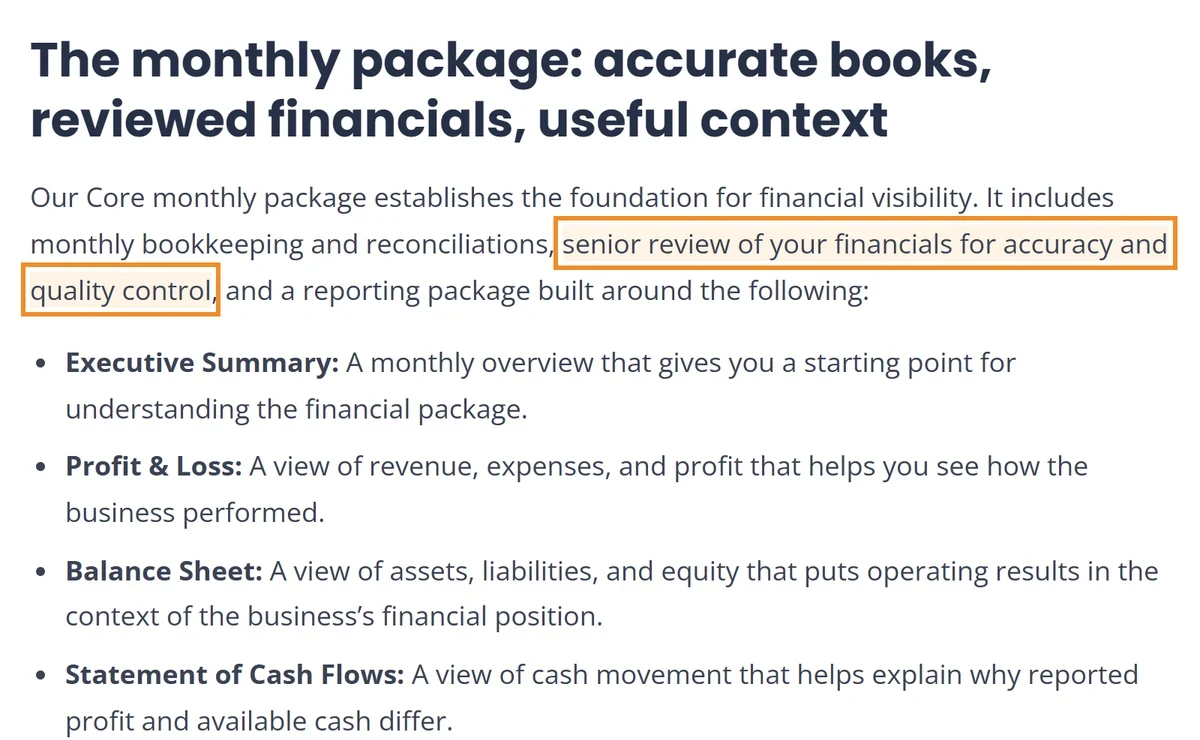
With our financial reporting for Dallas businesses, Core includes monthly bookkeeping and reconciliations, senior review, an Executive Summary, a P&L, a Balance Sheet, and a Statement of Cash Flows. It includes a year-end package for your tax preparer. Growth adds quarterly financial reviews, custom reporting, cash flow visibility, trend reporting, and budget-to-actual reporting. Scale adds CFO advisory, including forecasting and scenario planning.
Use actual results to keep your outlook current. If new work starts later than expected or vendor payments come due sooner, update the cash forecast and record what changed. If you’re building the 2027 budget for a Dallas service business, use the latest reconciled results as your starting point so you can explain where the plan departs from recent performance.
What will LUCI cost, and where should I start?
We’re based in Dallas-Fort Worth and work virtually through secure cloud-based systems. You can work with us from Dallas, Plano, Frisco, Richardson, Irving, or elsewhere without an office visit. We primarily serve established service businesses, typically with $250K or more in annual revenue, including agencies, law firms, consultants, medical and dental practices, and general contractors.
| Service | Pricing | When it fits |
|---|---|---|
| Financial Review & Assessment | $597 one time | You want a 60-minute review of your actual QuickBooks file and a prioritized plan you can keep. |
| Bookkeeping cleanup and catch-up | One-time fixed fee quoted in writing before work begins | Missing months, unreconciled accounts, or incorrect balances need to be fixed before you issue statements. |
| Monthly bookkeeping and reporting | Minimum $500 per month, with a fixed fee quoted after discovery and a one-time fixed onboarding fee | You want a regular close and senior-reviewed statements available when the lender asks for updates. |
| Fractional CFO advisory | Part of Scale or a standalone fixed-fee proposal after a discovery call | You need cash flow forecasting or scenario planning tied to the proposed use of funds. |
The cleanup quote depends on the months, accounts, and corrections involved. Timing depends on how many months need work and how quickly you can gather the statements. Monthly services are month to month with 30 days of written notice.
If you’re unsure how much needs fixing, start with the $597 Financial Review & Assessment. We review your actual file with you, and you keep the action plan whether or not you hire us. You can also start with our free 7-question Financial Operations Assessment.
Already have a checklist or a deadline? Schedule a consultation through our contact page or call 214-233-5454. Tell us which reports the lender wants and where the books stand so we can discuss what needs to happen first.
Frequently asked questions
Does an SBA lender use the same checklist as a conventional bank lender?
The core financial records can overlap. Ask the lender handling your application for its written checklist, reporting periods, and required format.
Can I send QuickBooks Online reports directly to my lender?
Ask whether the lender accepts management-prepared statements and which basis it wants. Before exporting reports, make sure the underlying accounts are reconciled through the reporting date.
Do I need a CPA to prepare my loan financials?
That depends on what the lender requests. LUCI prepares management financial statements, and your CPA handles tax returns and any CPA-prepared statements the lender requires.
Do my books and filed tax return have to show the same profit?
Differences can arise from accounting basis or year-end tax adjustments. Compare the records with your CPA so you can correct bookkeeping errors and explain remaining differences.
How long does bookkeeping cleanup take?
Timing depends on the months involved and how quickly the source statements are available. The number of accounts and the corrections needed also affect the cleanup scope.
Can LUCI help if my QuickBooks books are current but I need projections?
Yes. Fractional CFO advisory can use your current financials to build cash flow forecasts and test scenarios as a standalone engagement or through Scale.
Can LUCI clean up my books without an office visit?
Yes. We work in QuickBooks Online and use secure cloud-based systems to work virtually with clients in Dallas-Fort Worth and nationwide.
Have a lender’s checklist and books that are not ready?
Send us the checklist and the last month you believe is complete. We will tell you what has to be reconciled, corrected and documented first, and quote any cleanup as a fixed fee in writing before work starts. We prepare the books and the statements; the lending decision is always the lender’s. For a first look at your file, book the $597 Financial Review & Assessment.