
Short answer: If you are looking for bookkeeping and payroll services in Dallas, put both with one accountable team. Payroll is often the largest expense in a service business, and when the people running it are not the people closing the books, the two sets of numbers drift apart. LUCI Financial Solutions keeps the books monthly and offers payroll, 1099 preparation and W-9 collection as add-ons, so everything is reconciled in the same close.
Ongoing clients can also add tax preparation, with returns prepared by Katrina Lochocki, CPA.
Key takeaways
- Split payroll and bookkeeping usually breaks at the seams: unreconciled liabilities, miscoded owner pay, missed 1099s.
- Every payroll run should land in the books by account, and every close should tie payroll liabilities to the register.
- Texas has no state income tax, but employers pay state unemployment tax to the TWC each quarter.
- W-2s and 1099-NECs are due January 31; collect W-9s before a contractor’s first payment.
- One team for books and payroll gives your tax preparer one clean year-end package.
What breaks when payroll and the books live with different people
Most owners do not set out to split the two. Payroll goes to a provider because an employee needs paying on Friday; the books go to a bookkeeper later; the tax return goes to a CPA in March. Three people, three sets of numbers, nobody responsible for the seams. Here is where the seams open.
Payroll liabilities are never reconciled
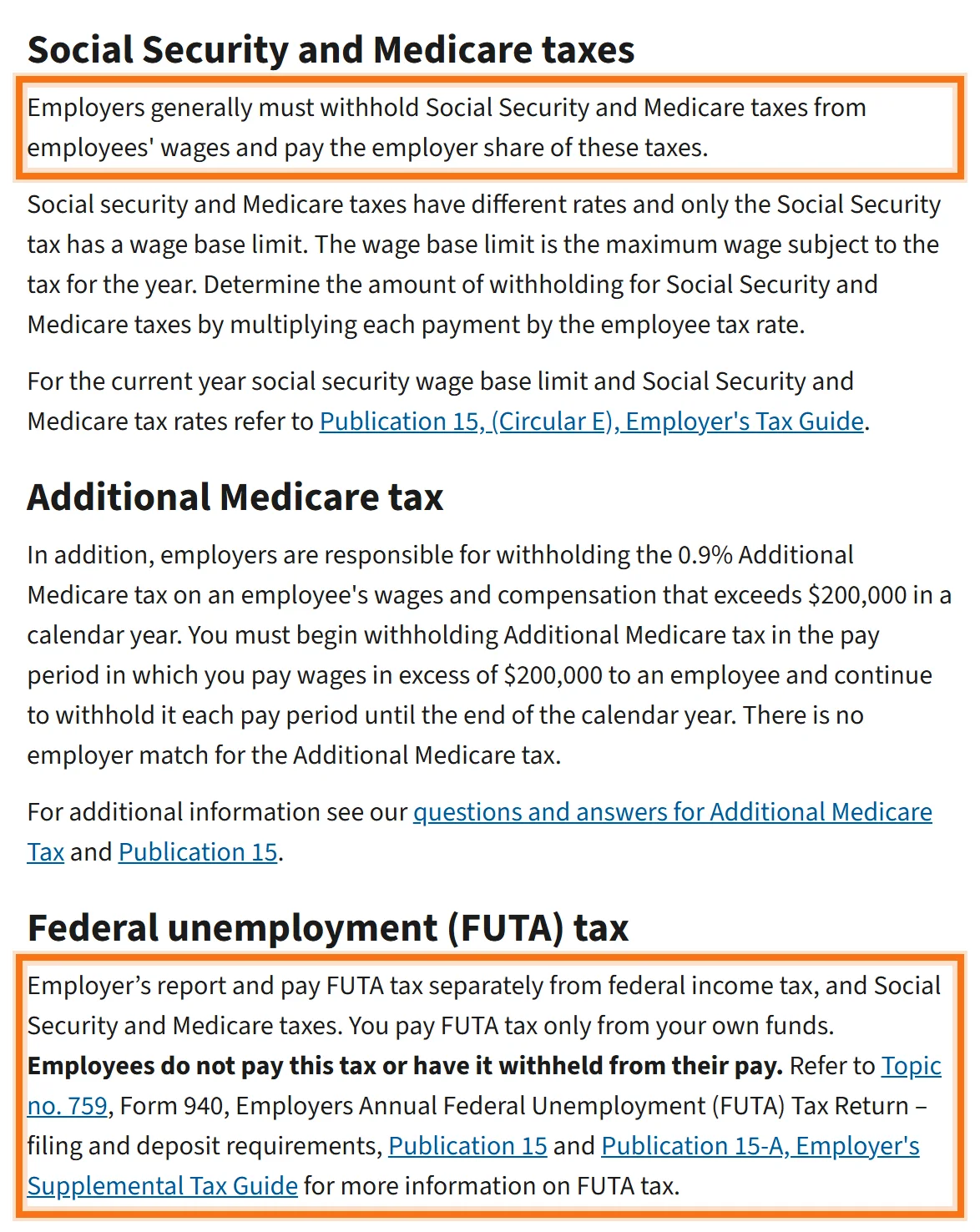
Every payroll run creates liabilities: federal withholding, Social Security and Medicare, federal unemployment, Texas unemployment, and any benefit deductions. The payroll provider pays them on your behalf, but the bookkeeper only sees a lump withdrawal in the bank feed. Without the payroll reports in hand, that withdrawal gets coded to “payroll expense,” the liability accounts are never cleared, and the balance sheet carries a growing number that nobody can explain. At year end the tax preparer either spends billable hours untangling it or files with the error in place.
Owner pay is miscoded
How you pay yourself depends on how your business is taxed. An S corporation owner takes a salary through payroll plus distributions; a sole proprietor or single-member LLC owner takes draws; a partner takes guaranteed payments and distributions. A bookkeeper who does not see payroll routinely records an S corporation salary as a draw, or a draw as an expense. Both distort profit, and the first one creates a question on the return.
Contractors are missed at 1099 time
Payments to contractors usually flow through the bank feed, not payroll, so the payroll provider never sees them and the bookkeeper may not flag them. In January someone has to find every vendor paid for services above the reporting threshold, confirm whether each is a corporation or an individual, and discover that nobody collected a Form W-9 for half of them. The deadline for furnishing and filing Form 1099-NEC is January 31, and chasing W-9s in the last week of January is how late filings happen.
W-9s are collected after the fact
The fix for the problem above is procedural: collect the W-9 before the first payment, not after the last one. That only works when the person who sets up a vendor in the books is the same person who will prepare the 1099s, which is the whole argument for one team.
What bookkeeping and payroll services Dallas owners actually need each month
A combined engagement is not just two services billed on one invoice. It is one routine where each payroll run lands in the books with its detail intact and each close checks the payroll accounts. This is how it runs for a typical client of ours:
| When | Payroll side | Bookkeeping side |
|---|---|---|
| Each pay period | Hours and changes collected, payroll processed, employees paid, tax deposits scheduled | Payroll journal entry posted by account: wages, employer taxes, benefits, liabilities, net pay |
| Weekly | New hires and contractors set up; W-9 collected before a contractor’s first payment | Bank feed categorized; contractor payments tagged to the vendor for 1099 tracking |
| Month end | Payroll register and liability report pulled for the month | Bank, credit card and loan accounts reconciled; payroll liability accounts tied to the register; owner pay checked against entity type |
| Quarter end | Form 941 and the Texas Workforce Commission wage report prepared and filed; sales tax return filed on the Comptroller’s assigned schedule | Quarterly filings tied to the books; Growth and Scale clients receive a review meeting |
| Year end | W-2s and 1099-NECs prepared and furnished by January 31 | Year-end financial package delivered to the tax preparer; books closed and locked |
How to read this table: read across a row to see what happens on each side at the same moment. If your payroll provider does the left column and nobody does the right one, the gaps show up at quarter end and at year end, exactly when filings are due.
The right-hand column is our standard bookkeeping services in Dallas; the left-hand column is the payroll and 1099 add-on. The point of the table is that neither column makes sense alone.
Texas and federal payroll basics every Dallas owner should know
These are the rules that come up in nearly every onboarding conversation. They are general; your situation may add others.
- No state income tax. Texas does not tax wages, so there is no state withholding to manage. That makes Texas payroll simpler than most states, but it is also why owners underestimate what is left.
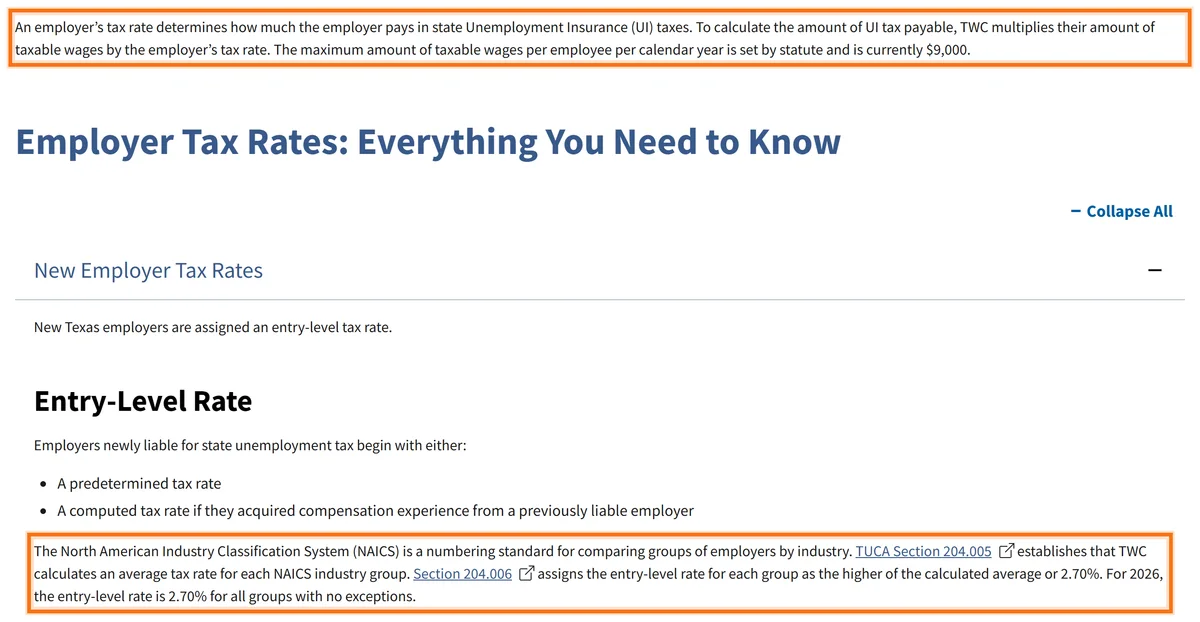
- Texas unemployment tax is quarterly. Employers report wages and pay state unemployment tax to the Texas Workforce Commission each quarter. The tax applies to the first $9,000 of each employee’s wages per year; new employers start at an entry-level rate (2.70% for 2026), and after that the rate is assigned to your account, so do not assume a neighbor’s rate is yours.
- Sales tax frequency is assigned, not chosen. If you collect Texas sales tax, the Comptroller assigns your filing frequency based on your account. The books should carry the liability at the same frequency so the return ties.
- Form 941 is quarterly. Federal income tax withheld plus Social Security and Medicare taxes are reported on Form 941 each quarter. The deposits themselves follow a schedule the IRS assigns, which is a separate thing from the return.
- W-2 and 1099-NEC are due January 31. Both forms must be furnished to the recipient and filed by January 31. There is no extension to rely on, so the contractor list has to be clean before the year ends.
- The 1099-NEC threshold changed. For payments made after December 31, 2025, Form 1099-NEC is required for payments of $2,000 or more to a non-employee for services; the threshold was $600 for earlier years and will be adjusted for inflation beginning in 2027. The IRS summarizes the rule at Am I required to file a Form 1099 or other information return?
Our guide to IRS Form 1099 for small businesses walks through who gets one and how to collect W-9s without a January scramble.
How LUCI combines bookkeeping, payroll and tax support
We are a bookkeeping and controller-level firm, not a CPA firm, and the way we are structured follows from that:
- Monthly bookkeeping is the base. Every client is on a fixed-fee monthly plan (Core, Growth or Scale) with reconciliations, senior review and a monthly financial package. Nothing else is sold without it.
- Payroll management is an add-on. We run payroll, post it correctly, reconcile the liabilities at each close and handle the quarterly and year-end filings. It is priced in the proposal based on headcount and frequency.
- 1099 preparation and W-9 collection are an add-on. Contractors are tracked all year, W-9s are requested at setup, and 1099-NECs go out by January 31.
- Sales tax filing, AR/AP and multi-state registration are available the same way, each scoped separately.
- Tax preparation is for ongoing clients only. Clients with integrated tax services have their returns (Forms 1040 with Schedule C, 1120S, 1120 and 1065) prepared by Katrina Lochocki, CPA, who also reviews the accounting team’s work. We do not prepare standalone returns for non-clients and do not offer tax resolution.
The full combination is described on our bookkeeping, payroll and tax support in Dallas page. If your CPA is staying, that is fine too: Core plans include a year-end package for your preparer, and Scale plans include coordination with your CPA directly.
Keeping the books tax-ready all year, not just in March
“Tax-ready” means the return can be prepared from the books without a cleanup first. In practice that requires four things done every month: every account reconciled, payroll liabilities tied to the payroll reports, owner compensation recorded for the right entity type, and contractor payments tagged for 1099s. Done monthly, year end is a handoff. Done once a year, it is a project. Our year-end preparation checklist for small businesses lists what should already be true by December if the routine held.
If you are not sure the routine is holding, the free seven-question Financial Operations Assessment takes a few minutes and shows where the gaps are.
Frequently asked questions
Who in Dallas offers bookkeeping and payroll under one roof?
LUCI Financial Solutions, based in Dallas–Fort Worth, provides monthly bookkeeping with payroll management as an add-on on the same engagement, so payroll is posted and reconciled by the team closing the books. Look for any firm that reconciles payroll liabilities at month end rather than just coding the withdrawal; that is the difference between combined service and two separate vendors.
Can a Dallas bookkeeping company also handle payroll filings?
Yes, if payroll management is part of its service. At LUCI the payroll add-on covers processing, the quarterly Form 941 and Texas Workforce Commission reports, and W-2s at year end. The filings are tied to the books each quarter so the liability accounts match what was filed.
Where can I get bookkeeping, payroll and tax support from one firm in Dallas?
LUCI offers all three to ongoing clients: monthly bookkeeping as the base, payroll and 1099 preparation as add-ons, and tax preparation for clients with integrated tax services, with returns prepared by Katrina Lochocki, CPA. LUCI is not a CPA firm and does not prepare standalone returns, so the tax work is only available alongside the bookkeeping.
Who handles 1099s and W-9 collection along with the books?
A firm that tracks contractors in the books all year can prepare 1099-NECs without a January scramble. LUCI’s 1099 add-on includes W-9 collection at vendor setup, contractor payment tracking in QuickBooks Online, and filing by the January 31 deadline. For payments made in 2026 and later, the reporting threshold is $2,000.
Which bookkeepers keep the books tax-ready all year?
Those who reconcile every account monthly, tie payroll liabilities to the payroll reports, and have a senior accountant review the financials before delivery. LUCI delivers a year-end financial package to every Core client’s tax preparer, and Growth and Scale clients get quarterly reviews so nothing waits until March.
Does Texas have payroll taxes a Dallas employer needs to file?
Texas has no state income tax, so there is no state withholding, but employers do report wages and pay unemployment tax to the Texas Workforce Commission every quarter. Federal obligations (Form 941 each quarter, W-2s by January 31) apply as they do everywhere. Sales tax, if you collect it, is filed on the frequency the Texas Comptroller assigns.
Put payroll and the books with one team
Tell us how many people you pay, how often, and where the books stand today. Schedule a consultation with LUCI Financial Solutions and you will receive a fixed-fee proposal covering bookkeeping, payroll and the add-ons you actually need.